

Modern football is no longer merely a competition of sheer physical endurance or individual technical brilliance from star players. Behind every pass, tackle, or off-the-ball run lies a complex, meticulously calculated system of tactical thinking. Understanding and conducting football tactical analysis requires viewers and experts alike to adopt a deep perspective, peeling back the layers of a match’s structure rather than focusing solely on the ball.
To conduct a comprehensive assessment, the analyst must observe how the 22 players on the pitch interact with one another, how space is created or restricted, and how managers react to the variables of the game gem88. Whether you are a passionate fan, a young coach, or a sports data enthusiast exploring modern sports platforms, mastering the methodologies of tactics will unlock a completely new perspective on the beautiful game.
Core Pillars of Tactical Execution

A complete tactical system is built from several closely interconnected elements. To analyze a team effectively, we need to break down and evaluate their play across four main phases of the match alongside their structural formation.
The Phases of Play on the Pitch
- Build-up Phase: How a team moves the ball from their defensive third into the opponent’s half. This can be achieved through short passes from the goalkeeper and center-backs, or via long, direct balls that bypass the opponent’s midfield.
- Attacking Phase: How players create chances in the opposition’s final third. This includes crossing from wide areas, playing incisive through-balls in the central channel, quick one-two combinations, or leveraging individual moments of brilliance.
- Transition Phase: The most volatile moments in football. There are two types of transitions:
- Defense to Attack (Counter-attack): Exploiting the opponent’s disorganization immediately upon regaining possession.
- Attack to Defense (Counter-pressing): Applying immediate pressure (Gegenpressing) to win the ball back or quickly dropping deep into a compact defensive block.
- Defensive Phase: The structural setup designed to prevent the opponent from scoring, categorized by pressing lines: high press, mid block, or low block.
Breaking Down Popular Tactical Formations
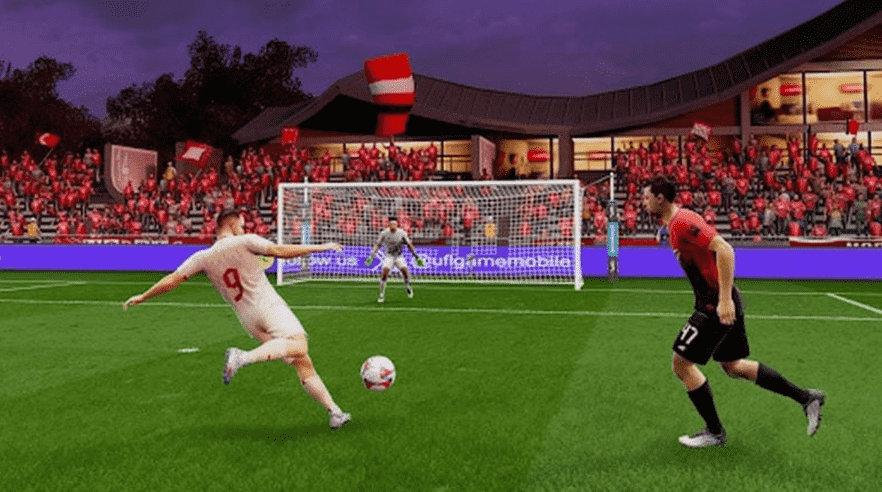
A formation on paper is merely a starting point, but it reflects the manager’s baseline strategic intent. Below is a detailed breakdown of common setups in top-tier football:
The 4-3-3 Formation: Balance and Spatial Dominance
The 4-3-3 emphasizes control over the central midfield while utilizing the full width of the pitch. Featuring two wide attackers, the team can stretch the opposition’s defensive line, opening up spaces for central midfielders to make forward runs.
- Strengths: Excellent ball control, easy formation of passing triangles across the pitch, and highly effective high-pressing capability.
- Weaknesses: Requires immense physical endurance from full-backs and central midfielders. If full-backs push too high, the space behind them becomes vulnerable to exploitation.
The 4-2-3-1 Formation: Versatility Between Attack and Defense
This setup is widely favored due to its high flexibility. Two defensive midfielders (a double pivot) provide a solid shield for the backline while freeing the front three attackers to create.
- Structure: Central midfielders control the tempo, the number 10 acts as the creative hub, wingers operate dynamically by cutting inside or hugging the touchline, and a lone striker serves as the focal point.
- Key to Execution: Seamless understanding between the number 10 and the defensive midfielders to maintain team compactness and prevent vertical disconnection between lines.
The 3-5-2 / 5-3-2 Formation: Power from the Flanks
Utilizing three central defenders solidifies the penalty box while completely liberating the two wing-backs to dominate the entire length of the flanks.
- In Possession: Shifts into a 3-5-2 as the wing-backs push high, creating diverse options in the attacking phase.
- Out of Possession: Transitions into a deep 5-3-2 block, closing off every path toward the goal.
Modern Tactical Concepts to Master

In modern tactical flow, the progression toward Goal Scoring begins with the Build-up phase, where a team establishes possession and systematically moves the ball forward. A key mechanism during this initial phase is Overloading, where players deliberately concentrate in specific zones to draw out defender attention and disrupt the opposition’s defensive shape.
This numerical superiority directly facilitates Space Creation, opening up crucial channels across the pitch—most notably in the Half-spaces. Occupying these intermediate vertical zones between the center and the flanks forces the opponent into difficult defensive dilemmas.
Once these dangerous spaces are unlocked, the team moves to Tempo Exploitation, rapidly shifting the speed of play to capitalize on moments of imbalance or rapid Transitions. By manipulating the rhythm of attack when the opposition is stretched, the team creates high-quality chances, ultimate leading to successful Goal Scoring.
The Half-Space Concept
The pitch is vertically divided into 5 channels: two flanks, the central channel, and the two intermediate zones between the center and the flanks, known as the half-spaces. This is the “golden zone” in modern football. When a player receives the ball in the half-space, their field of vision is significantly wider than on the touchline, and opposition defenders face a difficult dilemma over who should step out to cover.
Overload and Underload Principles
A clever tactical scheme deliberately concentrates multiple players in one area (Overload) to draw the defensive block toward that side. Immediately following this, a long diagonal pass rapidly switches the attack to the opposite side (Underload)—where a teammate is left in a 1v1 situation or completely unmarked.
Position Play (Juego de Posición)
Position Play is not simply about standing in an assigned spot on a formation chart; it is a philosophy where players fluidly adjust positions to create passing lanes and occupy strategic spaces, systematically moving the ball through the opponent’s lines.
How to Evaluate a Match Like a Professional
To practice football tactical analysis logically and professionally, you can follow a structured observation process:
Step 1: Observe the Team Block
- What distance is the team maintaining between their defensive line and attack?
- Does the team maintain vertical and horizontal compactness when defending?
- Are spaces between the lines easily exploited by the opponent?
Step 2: Track the Pressing Structure
- Does the team push high to pressure immediately when losing the ball, or do they intentionally fall back to the middle third?
- When are offside traps or pressing triggers activated? (e.g., when the opponent plays a back-pass to the keeper, or when a pass is played wide to the touchline).
Step 3: Analyze Attacking Patterns
- Does the team prefer small-group combinations through the center, or do they funnel play out wide for crosses?
- Are set-pieces (corner kicks, direct free kicks) executed through rehearsed tactical routines?
When seeking high-quality analysis and accurate, up-to-date information on match developments and team form, fans often turn to https://gem88.racing/ for a multi-dimensional perspective on specialized statistics.
The Importance of Data and Analytics in Tactical Analysis
Alongside visual observation, quantitative data plays a crucial role in verifying tactical hypotheses. Here are the key advanced metrics to combine with your analysis:
- xG (Expected Goals): Measures the quality of finishing opportunities to evaluate attacking efficiency and dangerous chance creation.
- PPDA (Passes Per Defensive Action): Reflects the intensity of high-range pressing by calculating the number of passes allowed before a defensive action is attempted.
- Progressive Passes: Identifies passes that move the ball significantly forward, measuring midfield penetration and progressive ball progression.
- Field Tilt: Calculates the possession ratio in the opposition’s final third to determine which team truly controls territory in dangerous areas.
Conclusion
The art of football tactical analysis is a continuous journey of learning. Every match is a dynamic canvas where tactics constantly shift under the influence of human decisions, timing, and real-time conditions. By mastering the principles of formations, compactness, space, and statistical data, you will enjoy the sport not just through goals, but through the captivating battle of wits taking place on the sidelines.
